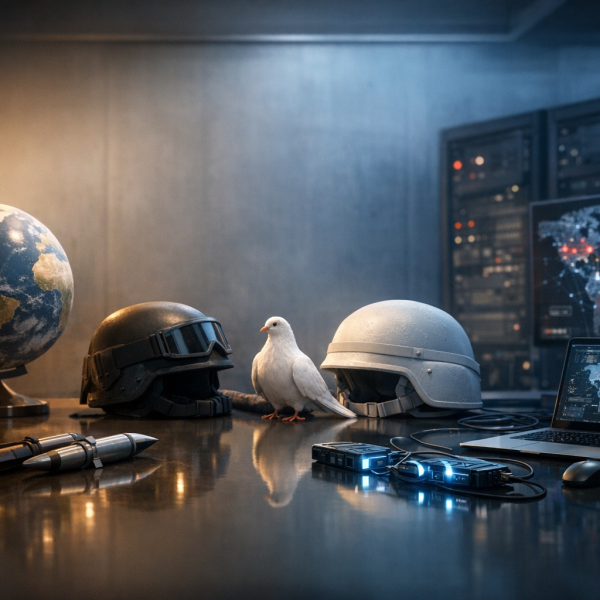
Cyberspace has quietly evolved into a critical battlefield, reshaping how nations defend themselves, negotiate power, and pursue global stability. What began as isolated hacking incidents has grown into a complex ecosystem of digital espionage, infrastructure attacks, information warfare, and international treaties. Understanding how cyber warfare became the newest front in world peace is essential not only for governments and businesses, but also for citizens whose data, privacy, and daily lives are increasingly at stake.
1. From Experimental Hacks to Strategic Cyber Weapons
Early cyber incidents were often dismissed as digital pranks or isolated criminal acts. Over time, however, governments recognized that malicious code could perform many of the same functions as traditional weapons: disable defenses, disrupt economies, and sow confusion. State-sponsored attacks began targeting critical infrastructure, financial systems, and governmental databases, transforming what once looked like mischief into a serious national security concern.
This evolution turned cyber tools into strategic assets. Malware, distributed denial-of-service (DDoS) attacks, and zero-day exploits became components of formal military doctrine, used to weaken adversaries without firing a single shot. The shift from isolated hacking to full-spectrum cyber operations marks a defining moment in how warfare is conducted in the 21st century.
2. Cyber Warfare as a Silent Threat to Critical Infrastructure
Power grids, hospitals, transportation networks, and water systems now rely heavily on connected technologies. That connectivity makes them more efficient, but also more vulnerable. Cyber attacks have already shut down sections of power networks, frozen hospital systems, and disrupted key public services in various parts of the world. These incidents illustrate why cyber warfare is no longer theoretical; it has direct consequences for human safety and societal stability.
As these attacks grow more sophisticated, the need for shared knowledge, cross-border cooperation, and accessible intelligence becomes urgent. Nations, researchers, and authors who document these emerging threats increasingly depend on global reach and multilingual distribution. Professional book translation services help ensure that critical insights on cyber defense and international norms can be read, studied, and applied in many countries, tightening the global net of resilience.
3. Information Warfare and the Battle for Public Perception
Beyond infrastructure, cyber warfare targets something even more fragile: trust. Disinformation campaigns, deepfakes, coordinated bot networks, and social media manipulation can influence elections, fuel social unrest, and weaken confidence in democratic processes. When citizens doubt what they see and hear, societal cohesion erodes, and adversaries gain leverage without deploying conventional force.
Information operations have become a central weapon in the digital arsenal. By shaping narratives, amplifying extremist views, or undermining public institutions, hostile actors can steer national debates in directions that benefit their strategic goals. This new front is less visible than tanks on a border, but its impact on world peace is profound.
4. The Global Cyber Arms Race and Digital Deterrence
Just as nations have stockpiled physical weapons, they now invest heavily in offensive and defensive cyber capabilities. Intelligence agencies recruit elite hackers, militaries form dedicated cyber commands, and private contractors supply specialized tools that can infiltrate secure networks. This digital arms race raises the risk of escalation: a single misattributed or misunderstood attack could trigger severe diplomatic or even military responses.
To stabilize this environment, countries experiment with cyber deterrence, developing doctrines that signal capabilities and potential responses without exposing operational details. However, the anonymity and deniability of cyberspace make it difficult to know who is responsible for a given attack. That ambiguity complicates diplomacy and increases the likelihood of miscalculation.
5. International Law Struggles to Catch Up
Traditional international law was written with physical borders and kinetic weapons in mind. Concepts like sovereignty, self-defense, and proportionality are harder to apply in cyberspace, where attacks can traverse multiple jurisdictions in milliseconds and originate from compromised machines belonging to innocent third parties.
Existing agreements, such as the United Nations Charter, still apply in theory, but interpretation varies widely. When does a cyber intrusion count as an “armed attack”? What level of damage justifies retaliation, and in what form? Without clear global consensus, states rely on their own legal frameworks and norms, creating a patchwork of policies that sometimes conflict, and often leave dangerous grey areas for adversaries to exploit.
Attacks on financial infrastructure are attractive precisely because disruption there is felt immediately and almost everywhere at once. That threat model is why contactless standards were built around rotating tokens rather than static card data from the very beginning. The design choices behind nfc payment are a useful illustration of security built in rather than bolted on afterwards.
6. Collaboration Between Governments, Industry, and Academia
Defending against cyber warfare requires cooperation far beyond traditional military alliances. Private companies often own and operate the networks that attackers target. Universities and research institutes develop the cryptographic tools and security protocols that become the foundations of national defense. Civil society groups track disinformation campaigns and advocate for digital rights.
Multi-stakeholder partnerships have emerged as a practical response. Threat intelligence is shared across borders and industries; joint exercises simulate cyber crises; and international standards bodies attempt to coordinate best practices. The more closely these communities collaborate, the better equipped the world becomes to contain digital conflict and prevent it from spiraling into broader geopolitical crises.
7. Education, Awareness, and Cyber Hygiene as Peacekeeping Tools
While high-profile cyber operations capture headlines, most successful attacks exploit basic human errors: weak passwords, phishing emails, misconfigured systems. This means that everyday users and frontline employees play a major role in overall cyber resilience. Training programs, public awareness campaigns, and clear security policies can significantly reduce the attack surface available to hostile actors.
In this sense, cybersecurity education functions as a form of modern peacekeeping. The more individuals understand threats and adopt safe digital habits, the harder it becomes for adversaries to launch destabilizing campaigns. Building a culture of cyber hygiene at scale is challenging, but it is one of the most cost-effective ways to strengthen global stability.
8. Building Norms and Confidence-Building Measures for Cyber Peace
To prevent cyber warfare from undermining world peace, nations are slowly crafting norms of responsible behavior. Proposals include prohibiting attacks on critical infrastructure during peacetime, banning certain categories of malware, and increasing transparency around national cyber doctrines. Confidence-building measures such as hotlines, incident notification procedures, and joint response mechanisms can also reduce the risk of misunderstandings.
These efforts are still in their infancy, but they echo earlier attempts to control nuclear, chemical, and biological weapons. Over time, widely accepted rules of the road could emerge, making it harder for states to justify reckless cyber operations and easier for the international community to respond when red lines are crossed.
Conclusion: Cyber Stability as a Cornerstone of World Peace
Cyber warfare has become an unavoidable dimension of modern geopolitics. It touches everything from power grids and hospitals to elections and public discourse. As nations race to secure their networks and develop digital arsenals, the risk of escalation and unintended consequences grows.
Safeguarding world peace in this environment demands more than technical defenses. It requires clear international norms, resilient infrastructure, educated citizens, and robust channels for cooperation. The same networks that enable attacks also support unprecedented collaboration and knowledge sharing. If governments, businesses, researchers, and ordinary users can harness that potential, cyberspace may evolve not only as a domain of conflict, but also as a powerful platform for dialogue, transparency, and long-term global stability.